There are plenty of options: Sole Proprietorship, Partnership, Corporation, Non-Profit. How to determine the best fit for you? In this article we will clarify what business structure will be more suitable for you.
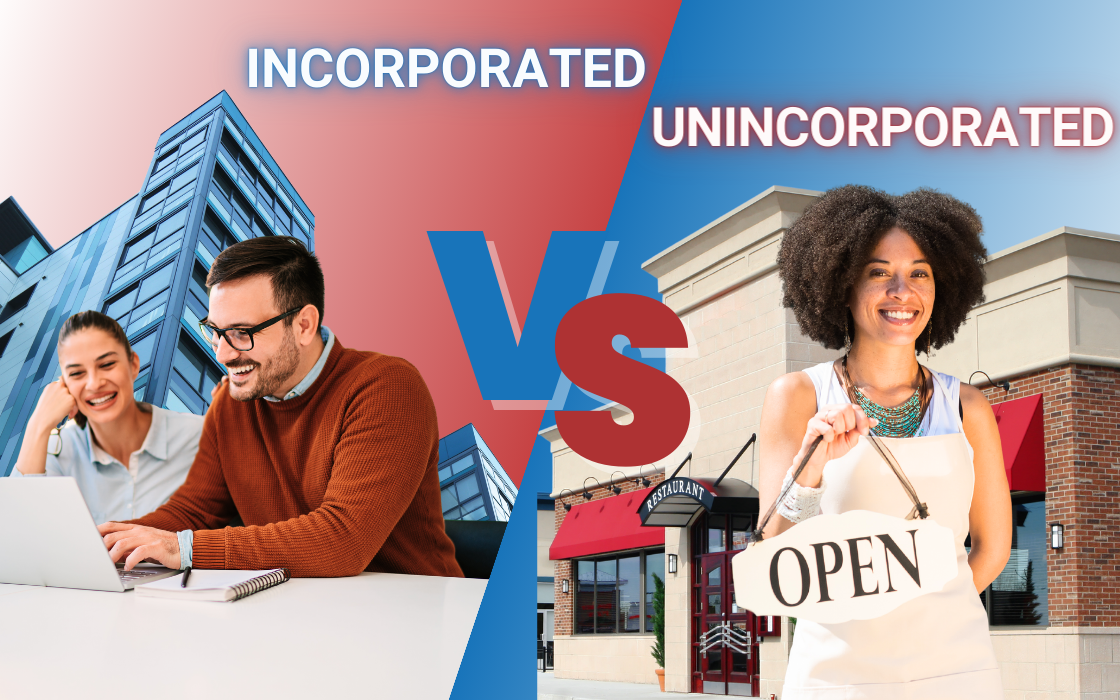
Choosing the right business structure is a critical decision for entrepreneurs, as it impacts various aspects of the business, including liability, taxation, and operational flexibility. In Canada, businesses typically choose between being incorporated or unincorporated. Each structure has its own advantages and disadvantages, making it important to understand the distinctions to determine what is better for your specific situation.
If it is your first business, you are not experienced and just trying to be an entrepreneur, we recommend starting with a small business – register as a sole proprietorship. Sole Proprietorship is a type of unincorporated business and it has many advantages.
The first advantage of the Sole Proprietorship is simplicity. Unincorporated businesses are easier and less expensive to set up and operate, with fewer regulatory and administrative burdens. You don’t have to do a lot of filings and paperwork like with incorporated business.
Sole Proprietorship can have only one business owner, that means you have full control over all business decisions and operations without needing to consult a board of directors or shareholders. Another advantage is the simplicity of tax filing. You don’t need to create a separate CRA account for your company. Business income is reported on the owner’s personal tax return, potentially simplifying the tax process and avoiding corporate tax rates.
Finally, an unincorporated businesses can adapt more quickly to changes without the need for formal procedures or approvals.
Although a Sole Proprietorship has multiple advantages, it also has disadvantages that you need to consider. The first disadvantage is that it can be more challenging to raise capital, as unincorporated businesses cannot issue shares and may be perceived as less stable by investors.
Another downside of the Sole Proprietorship is a limited growth potential – the growth potential may be constrained due to the difficulties in raising capital and the reliance on the owner’s personal resources and credit.
Lack of Continuity: The business’s existence is tied to the owner’s involvement. If the owner retires, becomes incapacitated, or passes away, the business may cease to exist.
The biggest disadvantage of the Sole Proprietorship and all unincorporated business is unlimited liability. Owners are personally liable for all debts and obligations of the business. Personal assets can be at risk if the business encounters financial difficulties.
While sole proprietorships offer simplicity and direct control, there are certain business activities where incorporating a business can provide significant advantages. Incorporation can offer better protection, scalability, and financial benefits that are crucial for the sustainability and growth of certain types of businesses. Here are some scenarios and business activities where it is generally better to avoid sole proprietorship and opt for incorporation:
1. High Liability Risk
Example Business Activities:
- Construction and Contracting: These businesses face substantial risks related to workplace injuries, property damage, and project liabilities.
- Healthcare Services: Medical practitioners and health service providers could face significant legal claims and malpractice suits.
Why Incorporate: Incorporation provides limited liability protection, ensuring that personal assets are shielded from business debts and legal claims.
Although, incorporated business is more complex, expensive and requires more filings, it has plenty of advantages, let’s take a closer look.
An incorporated business is a legal entity that is separate from its owners. This structure is often chosen by entrepreneurs seeking to establish a more formal business presence with distinct legal protections and benefits.
The main and biggest advantage of incorporating is that owners (shareholders) are not personally liable for the debts and obligations of the corporation. Their liability is limited to the amount they invested in the business.
A Corporation also has tax benefits: lower tax rates on business income compared to personal income tax rates. They can also take advantage of tax deductions and deferrals.
Raising Capital: it is easier for corporations to raise capital by issuing shares to investors. This can provide significant financial resources for growth and expansion. An incorporated business continues to exist even if the ownership changes or the original owners leave the business, providing stability and continuity.
Credibility: Incorporation can enhance the credibility and perceived legitimacy of the business, making it more attractive to investors, customers, and partners.
As you can see, the incorporation of the business is a very good option if you plan to grow and expand your business.
Deciding between an incorporated and unincorporated business structure depends on various factors, including the nature of your business, your financial goals, risk tolerance, and long-term plans. An incorporated business offers limited liability, tax benefits, and growth potential but comes with greater complexity and regulatory requirements. Conversely, an unincorporated business provides simplicity and direct control but exposes owners to personal liability and may limit growth opportunities.